
Rugs do a lot of quiet work in a busy home, softening footsteps and bringing warmth to wooden floors while gradually trapping everyday dust, outdoor grit, food spills and household odours deep within the pile. While regular vacuuming lifts loose surface dirt, it cannot reach the fine grit and oils that settle down at the base of the fibres over months of use.
Professional rug cleaning works by inspecting the rug’s fibres, dyes and backing first, then matching the cleaning method to how the rug is made—removing embedded dirt, refreshing the pile and drying the rug under controlled conditions so it does not shrink, curl or develop damp smells.
Why Different Rugs Need Different Cleaning Methods
Unlike fitted wall-to-wall carpets, area rugs vary hugely in their materials, dyes and construction. Treating every rug the same way can easily ruin a delicate piece, which is why professional rug cleaning always starts by identifying what the rug is made from:
- Natural wool and traditional hand-knotted rugs: Require gentle, pH-balanced solutions and careful temperature control so the natural wool oils are preserved and vegetable or rich dyes do not bleed.
- Synthetic rugs (polypropylene, nylon and polyester): Usually handle deeper wet-washing well, helping to lift everyday family spills and pet odours from high-traffic living rooms.
- Viscose, bamboo silk, jute and sisal rugs: Highly sensitive to water and friction; excess moisture can cause plant and regenerated fibres to brown, stiffen or shrink, so low-moisture specialist care is essential.
- Tufted and glued-backed rugs: Must be cleaned without soaking the latex adhesive holding the backing together, which can otherwise blister or crumble.
You can view our price list for a helpful guide to how rugs are priced by size and construction.
Limits and Risks: Stains, Colour Movement and Existing Wear
Setting realistic expectations is an important part of looking after any rug. Professional cleaning is designed to remove trapped dirt, revive flattened fibres and improve overall hygiene—not to make an older, well-used rug look brand new.
Several factors can affect the final result:
- Old and set-in stains: Tea, coffee, red wine, pet urine or spills that have already been scrubbed with supermarket stain sprays often chemically alter the dye of the rug and cannot always be guaranteed to come out completely.
- Unstable dyes and colour movement: Some patterned rugs—particularly older or imported pieces—contain dyes that can run if treated with the wrong solution, which is why colour testing is so important.
- Hidden wear and sun fading: Sometimes a layer of household soil masks threadbare patches, moth damage or sunlight fading that becomes more noticeable once the surface dirt is washed away.
- Weak fringes and edges: Frayed bindings or brittle cotton fringes need gentle handling so they do not tear further during cleaning.
How Ozzy’s Dry Cleaners Inspects and Cleans Your Rug
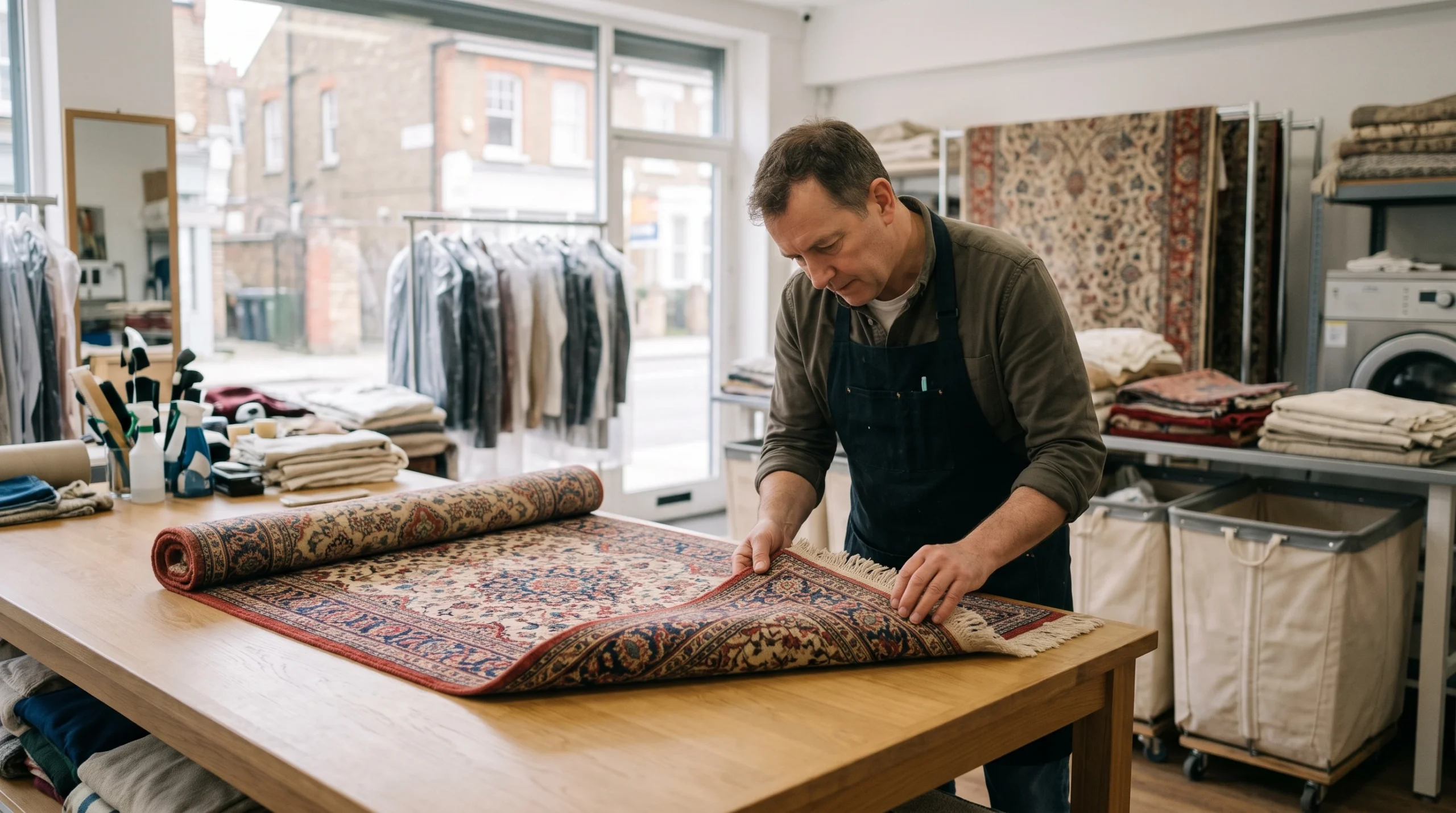
At Ozzy’s Dry Cleaners in Stoke Newington, North London, we inspect every rug carefully before deciding how to treat it. We check the face fibres, the knot or tuft backing, any care label attached to the underside, the stability of the colours and any existing wear or staining.
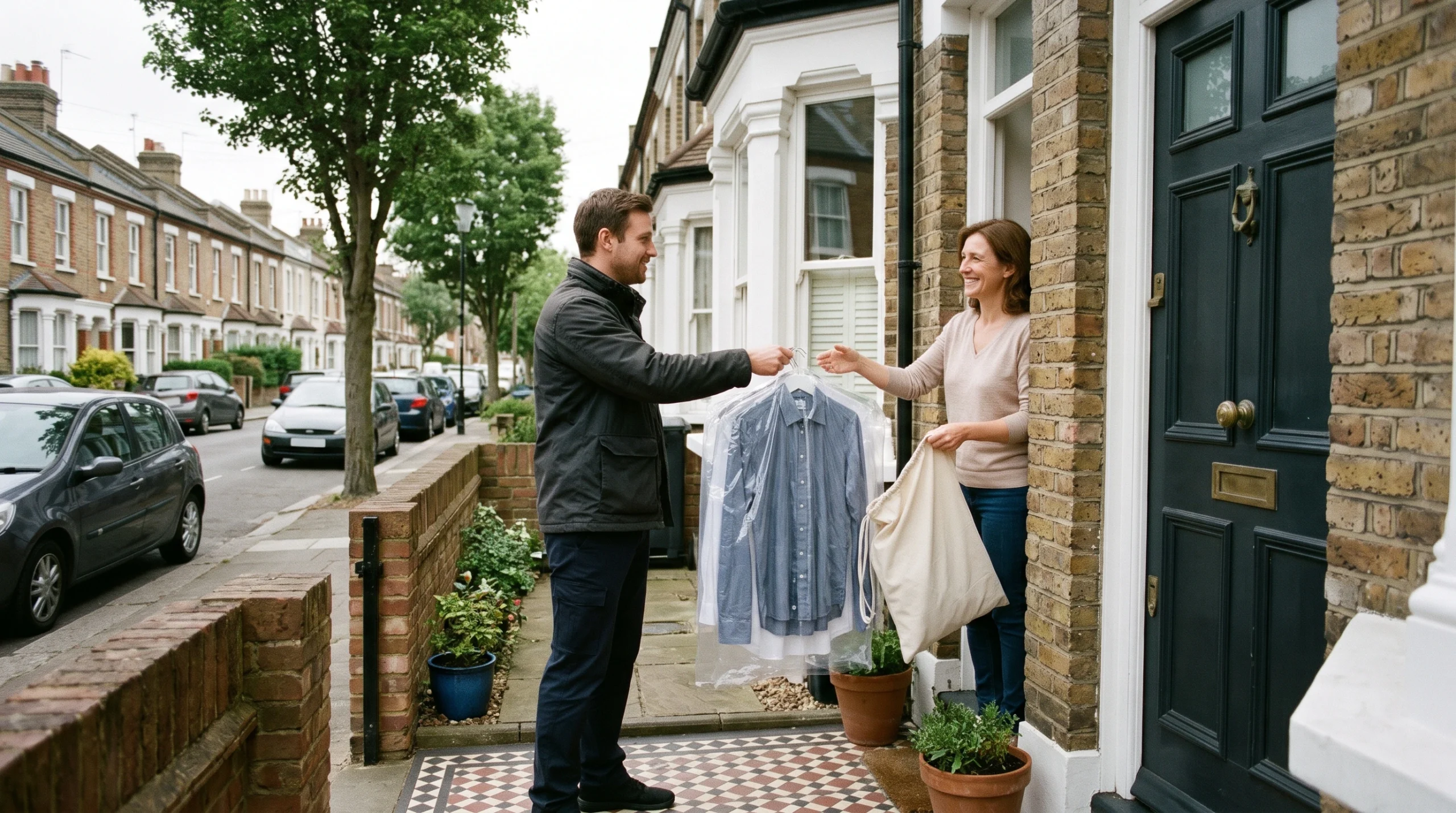
Because two rugs of the same size can require completely different care, website prices act as an initial estimate. Once we have inspected your rug and measured it accurately, we will confirm the recommended cleaning method and the final price with you before any work begins. For larger or heavy rugs that are awkward to carry, we also offer convenient collection and return across our North London service area.
Practical Advice Before Having Your Rug Cleaned
If you spill something on your rug or are preparing it for collection, a few simple steps will help protect the fibres:
- Blot spills immediately—never rub: Press a clean white towel gently onto fresh liquid spills to soak up moisture; scrubbing twists the pile and pushes the stain deeper into the backing.
- Avoid harsh household carpet sprays: Shop-bought foams and bleach-based cleaners often leave sticky residues or strip patches of colour from wool and natural fibres.
- Point out pet accidents or old marks: Let us know what caused a stain or odour so we can use the right neutralising treatment.
- Roll rather than fold: When moving or preparing a rug for collection, roll it up smoothly rather than folding it into squares, which can crease or crack the backing.